
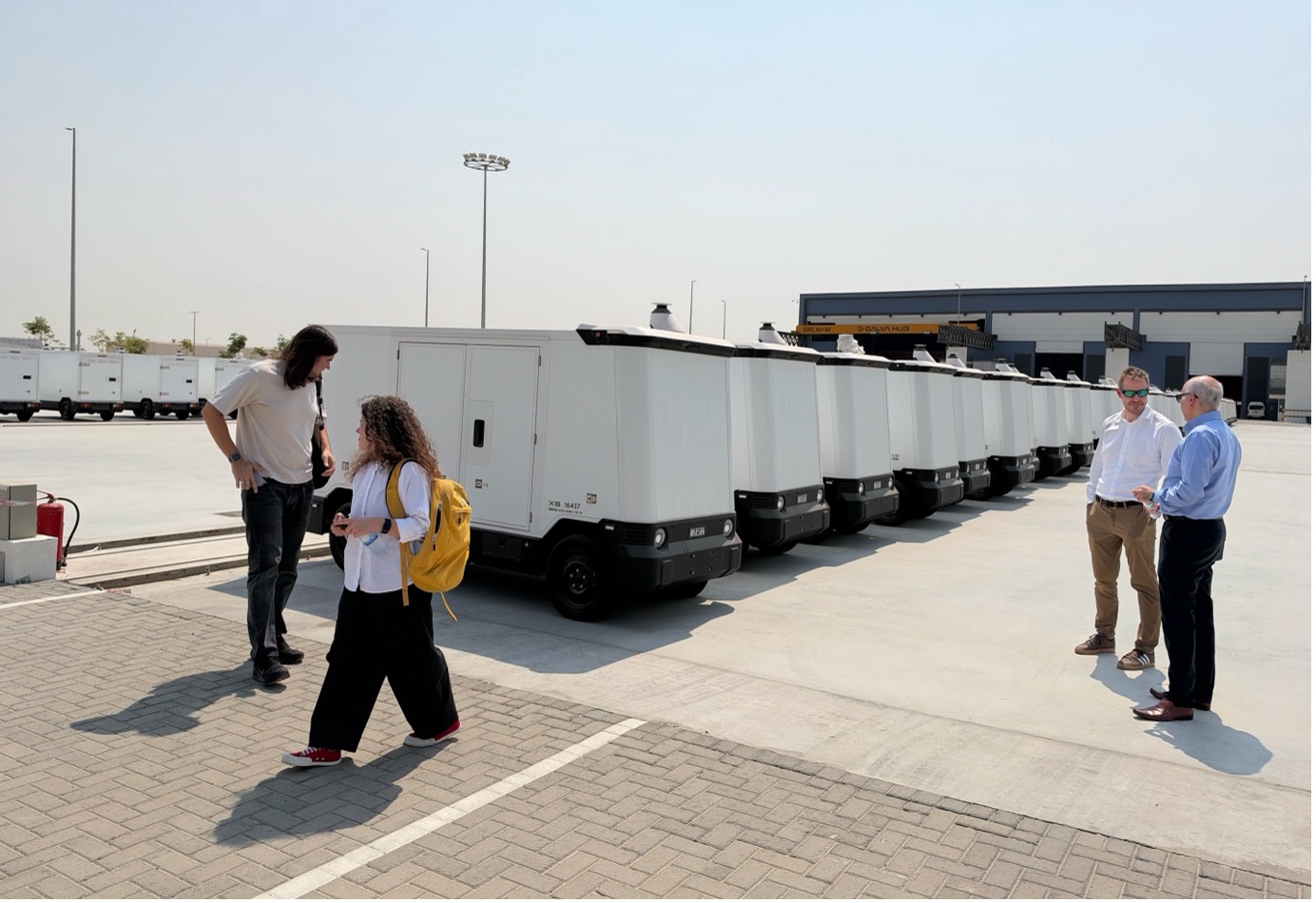
For anyone who visited Expo 2020, engaging with Opti, the robot provided by Terminus, was one of the most memorable experiences. Opti was about entertainment value: engaging with kids, performing dance routines and providing a futuristic vibe with a human touch. But there were also security patrol and delivery robots used during the six-month event, and robots in the urban environment have come a long way since then. We have identified over 20 robotic use cases for cities and districts, considering their maturity, impact and implementation approaches.
An urban robot is a powered machine that carries out a task in, on or around city assets or public space, moving autonomously, under remote supervision, or under remote control by a person.
We exclude drones and autonomous vehicles, which sit in their own class, from this definition.
Urban robotics applications range from pilots to established operations. Indoor floor cleaning is well established and still growing fast: sales of professional cleaning robots, mostly floor cleaners, rose 34% in 2024 and 40% in 2025 (IFR). Outdoor sweeping is also established. Autonomics machines work at Oxagon in Saudi Arabia and at the Museum of the Future in Dubai, and Gausium and Trombia sell outdoor sweepers commercially.
Solar panel cleaning is another use case with widespread use and offers real value for dry, dusty, utility-scale solar. The benefits are marginal for large commercial rooftop solar cleaning where semi-autonomous robots can reduce labour time, but it’s harder to justify the cost. Other areas such as inspection, valet parking, mobile EV charging and moving goods and people are still early commercial, as outlined below.
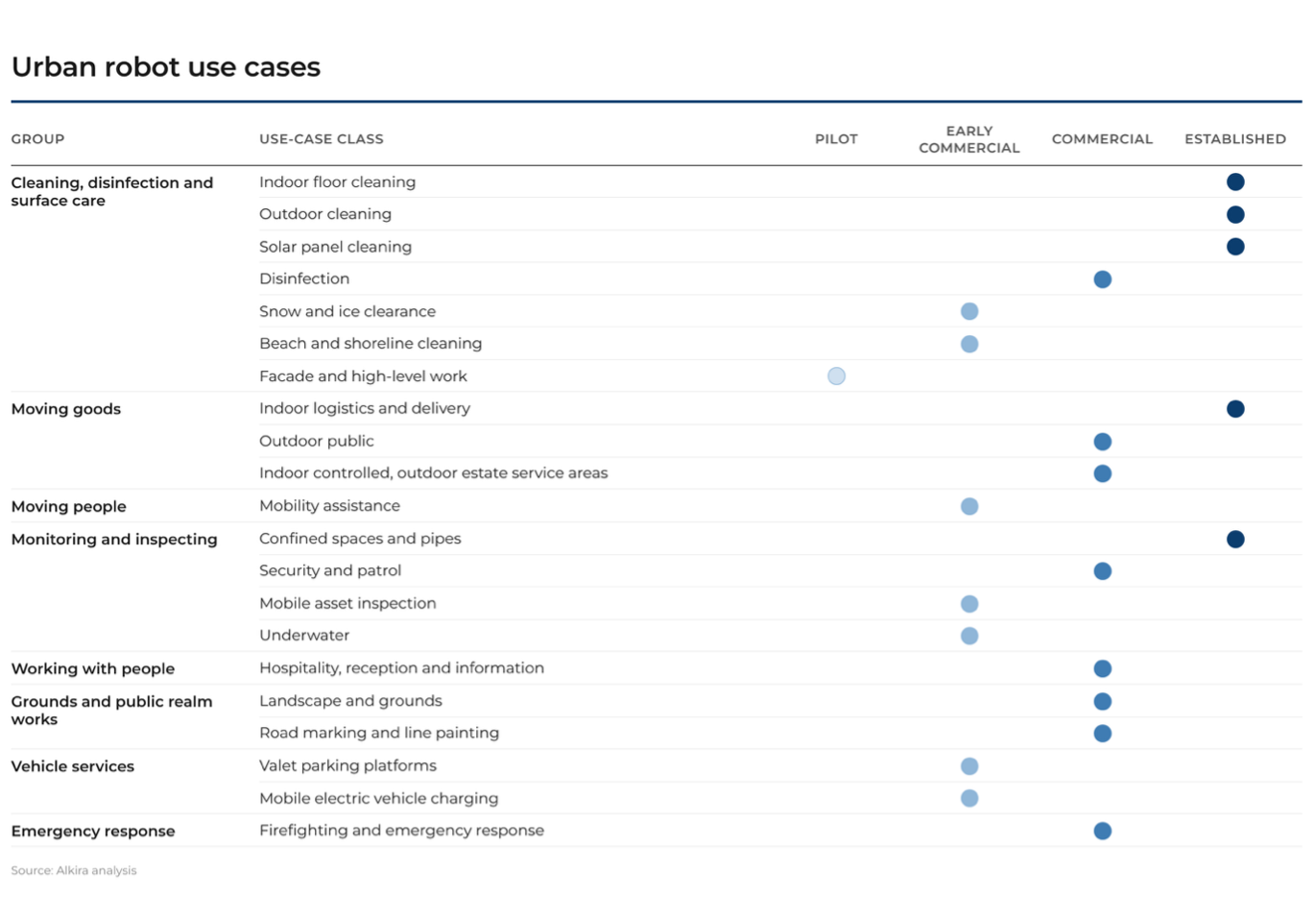
The maturity of use cases can differ by country, usually due to regulation and labour cost rather than technology. In China, autonomous sanitation vehicles are licensed to work on public roads. Autonomous outdoor cleaning robots are already working at various locations across the UAE and Saudi Arabia. Countries with tighter regulations are at the pilot or early commercial stage.
So far, the robotics industry has borrowed the car industry scale: SAE J3016, which applies to motor vehicles driving on public roads, including car parks. Delivery robot suppliers routinely describe their products as Level 4.
These claims may be right about what the machines can do, but the standard was written for vehicles on roads and doesn’t describe a machine travelling along a footpath, cleaning a floor or patrolling a site.
ISO is developing a series for public-area mobile robots (ISO 4448), but it has no autonomy scale.
We have defined an Urban Robotics Service Autonomy Level (SAL) scale with six levels from A0 to A5. The scale is anchored on three things relevant for urban robots:
Those three things drive both the safety case and the operating cost.
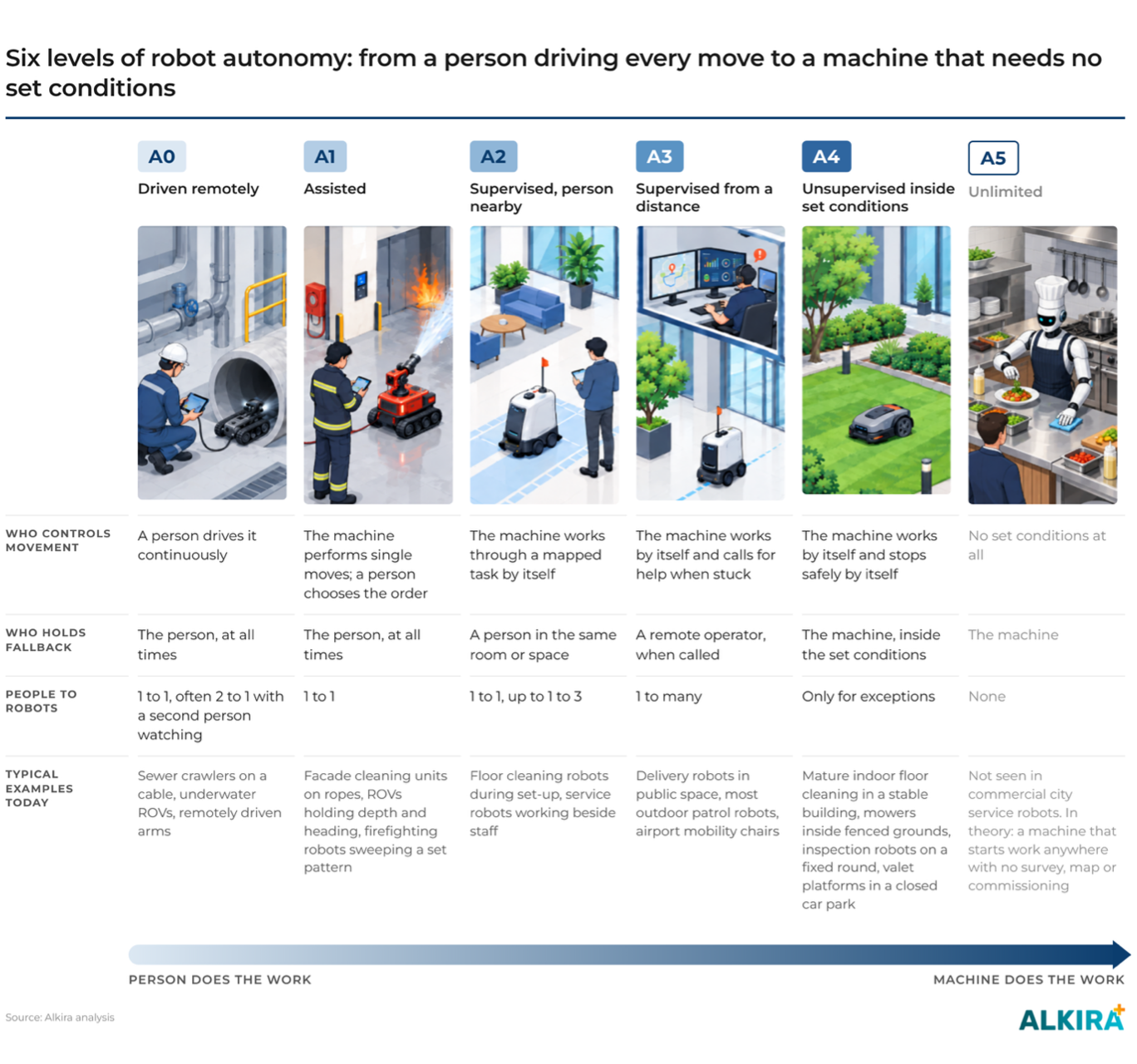
Autonomy is a design claim, but it doesn’t tell the full story of how robots operate in urban environments.
Robots should not create more work than they remove. A machine described as autonomous that needs a person to intervene every twenty minutes has not removed a job. It has changed one job into another and added the cost of the robot itself.
Therefore, a key metric to evaluate and contract robot vendors is interventions per hour or per km travelled, in addition to the autonomy level.
Robots are useful where work has to be done, the work is repetitive, and people to do it are expensive, hard to find, or both. Where labour cost is low, or the work is not repetitive, the cost case for urban robotics is weak. The drivers for urban robots are outlined below.
Identifying which use cases are possible and valuable is the start of the journey. The next steps are to pick the right operating model, understand the design considerations and evaluate the business case. We will cover these in our next post.
This article is based on our UrbanStack Blueprint framework for cities. We design and deliver urban digital infrastructure.

